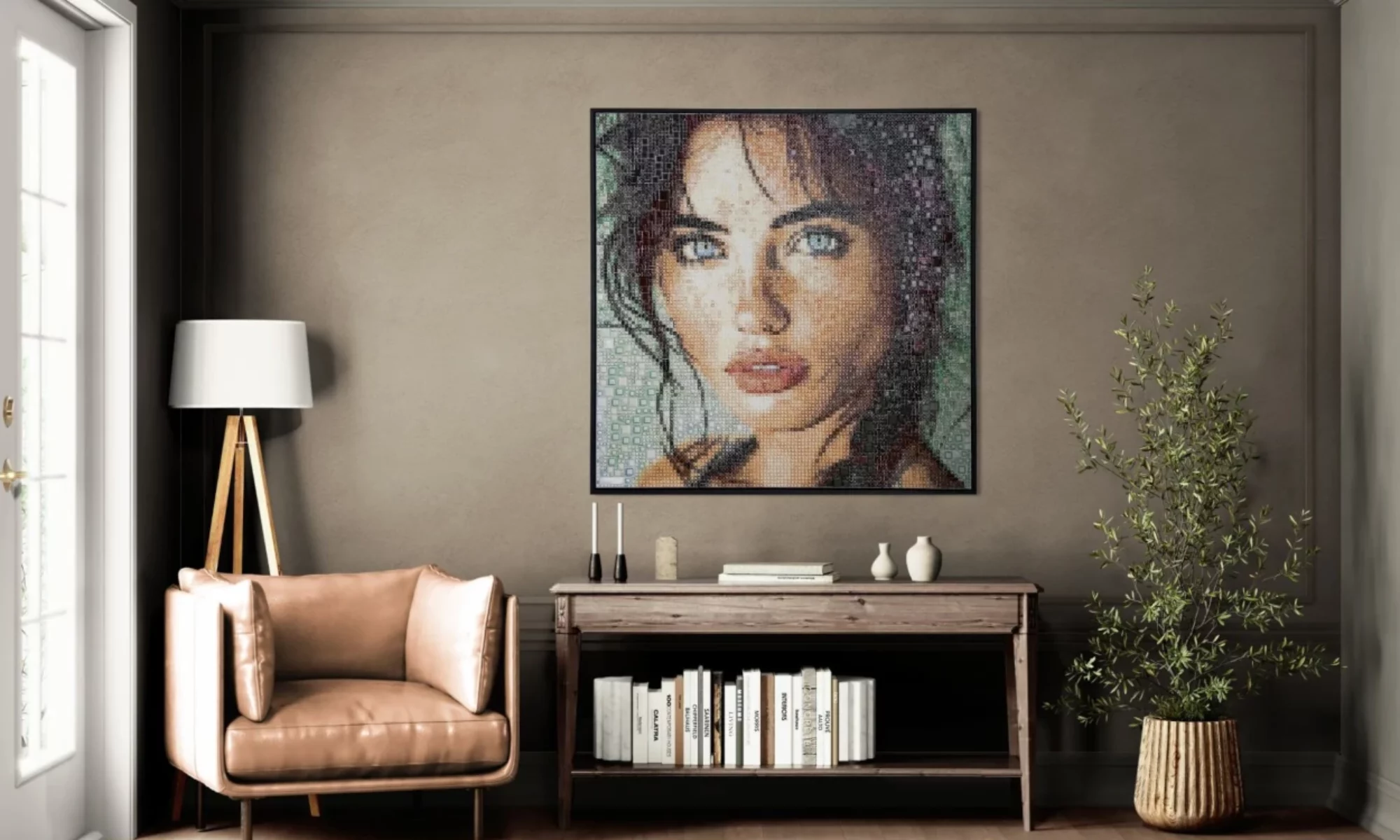

Creating a glass mosaic artwork is a skilled, hands-on process that blends artistry and precision. It begins with selecting a custom color palette using transparent, opal, or textured fusing glass (e.g., Bullseye, Oceanside) tailored to the portrait’s design. Each glass piece is hand-cut, broken, and carefully arranged on kiln shelves. In the kiln, the glass is heated to around 700°C to fuse together—a technique called glass fusing. Each firing, including controlled heating and cooling, takes up to 24 hours, with a single artwork requiring 2–6 firings. Finally, the fused glass pixels are meticulously assembled into the portrait and bonded to a durable substrate, such as laminated MDF, melamine-coated MDF, or Dibond, for a stunning, lasting piece.
Depending on size and complexity, a glass pixel artwork can contain up to 30,000 individual pieces, each contributing to its intricate beauty.
Glass fusing, one of the oldest glass art techniques, dates back to at least 2000 BC in ancient Egypt, predating glassblowing. It involves heating glass pieces or strips—often in vibrant colors—in a kiln until they meld together. The process allows for a range of effects, from blended hues to distinct textures. A related technique, tack fusing, uses lower temperatures to bond glass while preserving each piece’s unique shape. Its ancient roots make it a time-honored craft, impossible to patent despite modern misconceptions.
Each portrait is elegantly framed in sleek, high-quality black brushed aluminum, ensuring a polished look and lasting durability.
A glass portrait weighs between 10 and 50 kg, depending on its size. For easy, secure installation, every piece comes with sturdy metal wall hooks or a French Cleat system.
No, the glasspixels are firmly glued with transparent SMX Hybrid Polymer adhesive, suitable for both indoor and outdoor use. We use substrates such as laminated or melamine-coated MDF or Dibond for superior adhesion. The glass pixels adhere so well that removing them without damaging the underlying substrate is nearly impossible.
We avoid using acrylic (plexiglass) as a substrate for our glass portraits for the following reasons: weak adhesion of the glass pixels, highly susceptible to scratches, less durable,
can discolor upon exposure to UV light and less stable (may warp in large-scale works).
STUDIO•QWARTZ glass portraits can be hung without issues in humid environments (bathroom, wellness area, pool area…).”
Yes, large-scale pieces are one-of-a-kind creations. Smaller works may belong to limited series, but the handmade process ensures no two are ever identical, making each artwork distinctly yours.
Absolutely! Studio Qwartz specializes in bespoke commissions, crafting personalized glass artworks to elevate your home or business. Tell us your vision, and we’ll bring it to life with unmatched craftsmanship.